Find Out If A Home Battery Is Worth It For Your Home
Receive a personalised battery assessment including recommended battery size, estimated rebate, annual savings and expected payback period. Battery Install Co specialises in home battery systems, EV charger installations, battery upgrades and smart energy solutions across the Sunshine Coast.
- Recommended battery size
- Federal battery rebate
- Annual electricity savings
- Estimated payback period
- SAA Accredited Installers
- Battery Storage Specialists
- Local Queensland Support
- Professional Installation & Commissioning
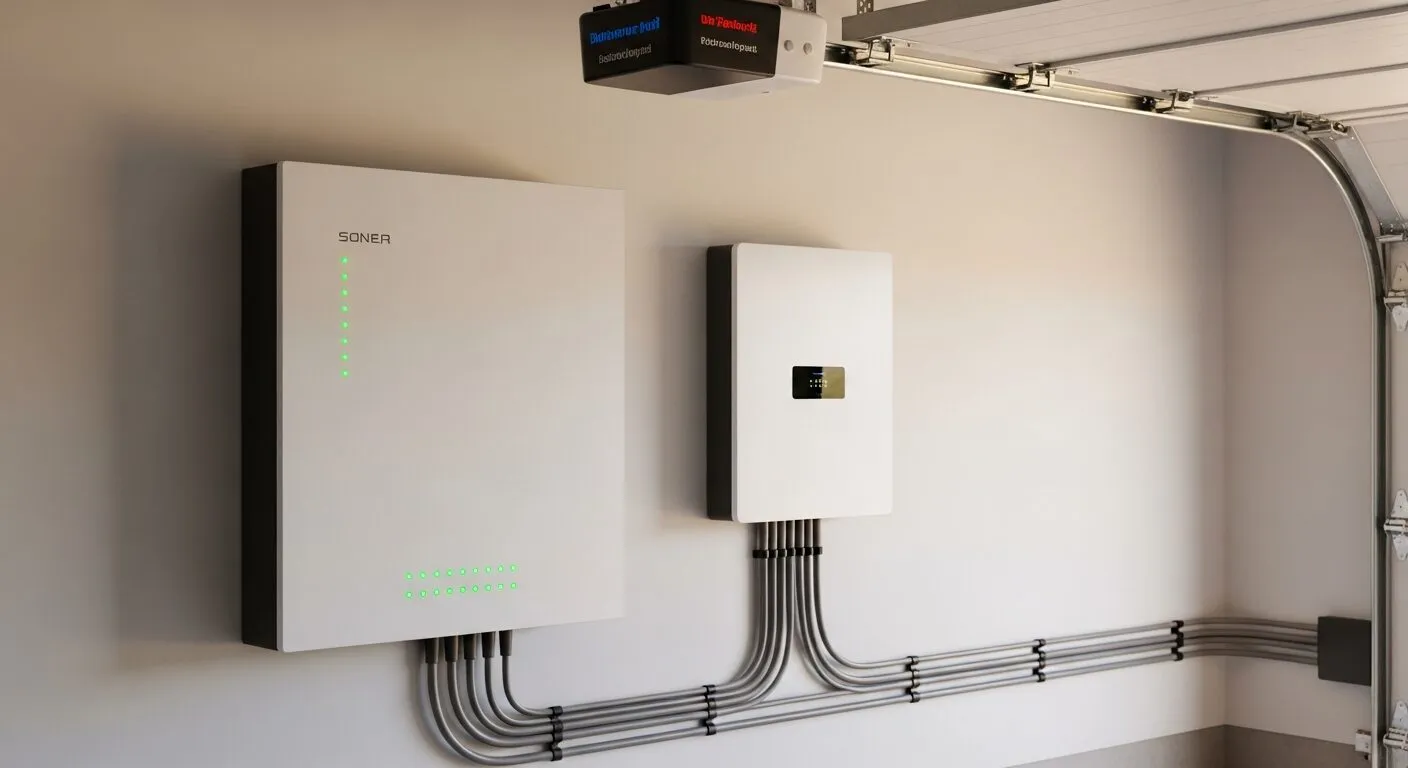
Lower Power Bills
Store excess solar and use it at night instead of buying from the grid.
Blackout Protection
Keep selected circuits running when the grid goes down.
Right Battery, Properly Installed
We size, design and install systems around your home, solar setup and backup needs.
See your savings in under a minute
Answer six quick questions and we'll estimate the right battery size for your home, your federal rebate, your annual savings and how quickly it could pay for itself. Results update instantly.
Tell us about your home
Indicative estimates based on typical South East Queensland usage and the current federal rebate. Your exact figures depend on your tariff, solar and switchboard — we confirm them at a free assessment.
Recommended battery size
13.5kWh
Estimated federal rebate
$3,409
Estimated annual savings
$875/yr
Estimated payback period
11.5yrs
Typical installed cost
$10,000 – $13,000
Indicative, after federal rebate
How the rebate scales with battery size
Your recommended size is highlighted. Notice how the rebate flattens as capacity grows.
Typical home battery investment
Most homeowners invest between $10,000 and $20,000+ after rebate, depending on battery size, backup requirements and existing solar equipment.
10–16kWh Systems
Typical investment
$10,000 – $13,000
after rebate
Best for
Smaller households and moderate energy usage
20–25kWh Systems
Typical investment
$13,000 – $17,000
after rebate
Best for
Family homes with higher evening consumption
30–40kWh Systems
Typical investment
$17,000 – $22,000+
after rebate
Best for
Large households, EV charging and extensive backup requirements
Indicative investment ranges after the federal rebate. Final pricing is confirmed in a fixed-price proposal following a site assessment.
Every property is different
Final pricing depends on a handful of real-world factors. We provide fixed-price proposals following a site assessment — no surprises.
Book my fixed-price assessment- Battery size
- Backup requirements
- Existing solar equipment
- Switchboard configuration
- Installation complexity
What size battery do you actually need?
The most suitable battery depends on your home's existing solar, switchboard configuration, backup needs and future energy goals — not a one-size-fits-all number. We assess each property individually before recommending a solution, and we don't push a brand on you online.
Daily energy usage
How much you use overnight — when solar isn't generating — sets the core capacity.
Existing solar production
A battery can only store the surplus your panels actually produce each day.
Time-of-use habits
Peak evening tariffs are where a battery saves the most by shifting your usage.
Backup requirements
Whole-home or essential-circuit backup changes the capacity and inverter you need.
Future EV & all-electric
Planning an EV, induction or heat-pump hot water? We size with that headroom in mind.
Switchboard & inverter
Your existing gear decides AC-coupled vs hybrid — confirmed on site, not online.
Why homeowners choose Battery Install Co
We do one thing properly: design and install home battery systems that suit your home and your goals.
Battery Specialists
We focus on battery storage systems and energy independence.
Quality First
We prioritise reliability, performance and long-term support.
Tailored System Design
Every battery system is designed around your home's energy usage and future plans.
Local Ongoing Support
Work directly with a local specialist who supports you long after installation.
Six common household patterns — and what we'd specify
No single battery suits every home. Here's how we typically configure systems for the household types we install most often across South East Queensland.
Family home with existing solar
5–10 kW rooftop solar already installed and exporting at low feed-in. Battery soaks up excess and runs the home from sunset to morning.
Large household, high evening load
Multiple bedrooms, ducted AC, electric cooking and hot water. Needs serious overnight capacity to avoid grid imports at peak rates.
Backup-critical household
Medical equipment, work-from-home, frequent storm blackouts on the Sunshine Coast or hinterland. Whole-home or essential-circuits backup is the priority.
EV charging at home
One or two EVs charged overnight. Pairs well with a Sigenergy DC-coupled system or a larger Sungrow/GoodWe hybrid for solar-direct charging.
Rural property / off-grid
Acreage block, weekender or property with unreliable or expensive grid connection. Selectronic or Victron platform with generator integration.
All-electric new build
No gas. Heat-pump hot water, induction cooktop, reverse-cycle AC, EV charger. Battery is designed in alongside solar from day one.
Brand-agnostic specification, across South East Queensland
There's no single best battery. The right brand depends on your existing inverter, your usage and your backup goals — we specify what actually fits.
Our most-installed home battery — GoodWe Lynx Home paired with an ET hybrid inverter. Strong value, full backup capability, and well-supported Australian warranty.
Sungrow's SBR and SBH battery ranges pair tightly with their hybrid inverters.
Sigenergy's SigenStor systems combine a hybrid inverter with modular battery storage that can grow as your needs grow.
Tesla Powerwall is widely recognised in Australia — AC-coupled, 13.
BYD Battery-Box Premium HVS and HVM are modular high-voltage battery systems that pair with a wide range of hybrid inverters.
Backup power and off-grid design — not just bolt-on solar batteries
Most solar installers will sell you a battery. Fewer can design the backup wiring properly, and fewer still can engineer a fully off-grid system. We do both.
Backup power systems
Essential-circuit and whole-home backup, wired through a proper backup sub-board with automatic transfer in under 20 milliseconds. We do the load surge calculations so your AC actually starts on battery — not just your lights.
- Essential-circuit sub-board design — lights, fridge, internet, home office
- Whole-home backup with Powerwall 3, Sigenergy or large Sungrow stacks
- Generator integration for extended outages and bushfire-zone properties
- Retrofit backup capability to existing batteries that were never wired for it
Off-grid & hybrid systems
Properly engineered off-grid systems for acreage, rural and weekender properties — the kind of design work most grid-connect installers don't touch. Selectronic and Victron platforms with generator integration, sized for year-round reliability.
- Selectronic SP PRO — Australian-made off-grid inverter platform
- Victron MultiPlus / Quattro for modular off-grid and hybrid systems
- Generator auto-start integration for winter top-up and extended cloud
- Hybrid grid + battery + generator for properties with weak grid connections
Independent comparisons, not manufacturer marketing
We install all the major brands and have no manufacturer affiliation. These guides lay out where each one wins and where it loses — pros, cons and which household it actually suits.
Tesla Powerwall vs Sigenergy: Honest Comparison
Powerwall and Sigenergy are two of the most-quoted batteries in South East Queensland right now. They suit different households. We install both and have no manufacturer affiliation either way — here's the honest comparison.
GoodWe vs Sungrow: Hybrid Battery System Comparison
GoodWe and Sungrow are the two most common value-leader hybrid platforms we quote. Both are solid choices. They differ in inverter style, battery options and monitoring — here's the honest breakdown.
AC-Coupled vs DC-Coupled Battery: Which Is Right for You?
Two ways to add a battery to a solar home: AC-coupled (a battery with its own inverter, alongside your existing solar) or DC-coupled (a hybrid inverter that handles both solar and battery on the DC side). Neither is universally better — the right choice depends on what you've already got.
Battery Backup vs Generator: Which Is Better for Blackouts?
Two ways to keep the lights on during a grid outage: a backup-capable home battery, or a petrol/diesel/gas generator. They solve the same problem differently. Here's the honest comparison.
Our battery assessment process
From first enquiry to a fully commissioned system — a clear, no-pressure path with a fixed-price proposal before you commit.
Battery assessment
Complete a quick online assessment for a recommended size, rebate, savings and payback estimate.
Property review
We review your switchboard, inverter, backup needs and the best location for your battery.
Fixed-price proposal
A clear, itemised proposal — you know the exact price before you commit, no surprises.
Professional installation
Installed by licensed Queensland electrical contractors, with care taken in your home.
Commissioning & support
Full commissioning, handover and monitoring setup, plus ongoing local support.
Real battery installs across South East Queensland
Tidy, compliant workmanship — wall-mounted batteries paired with hybrid inverters and proper backup wiring. A few recent jobs from our team.
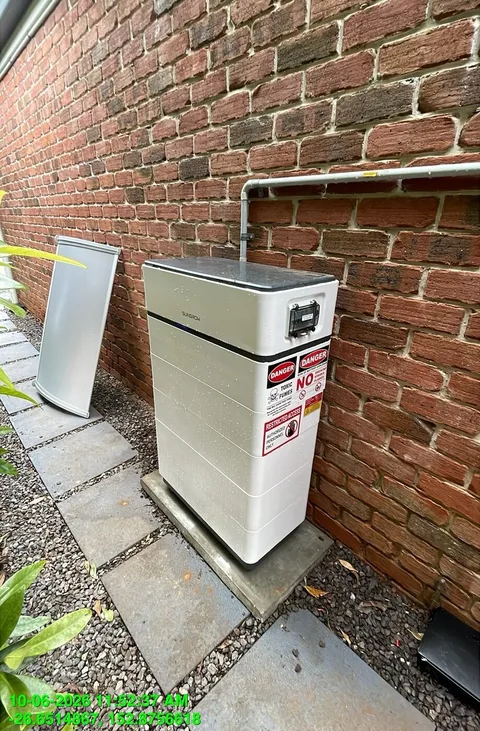
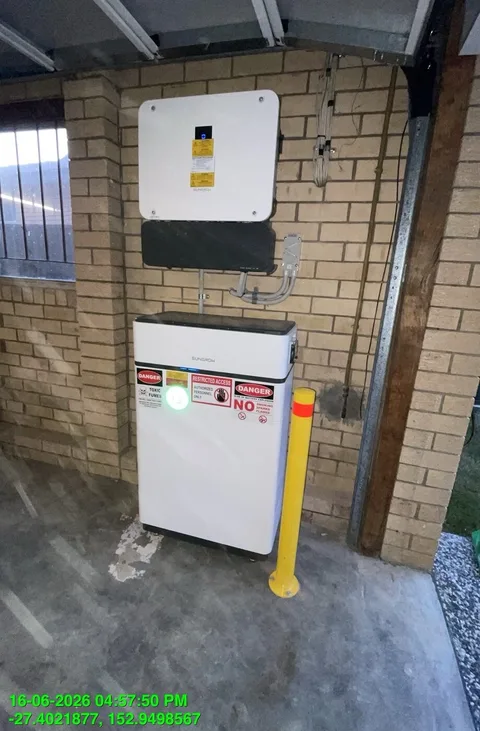
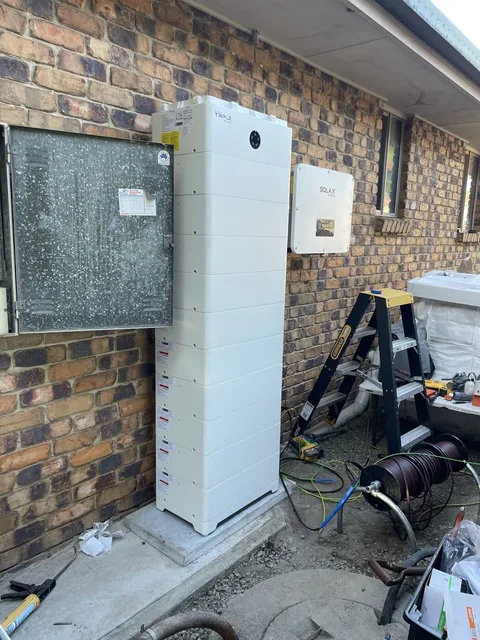
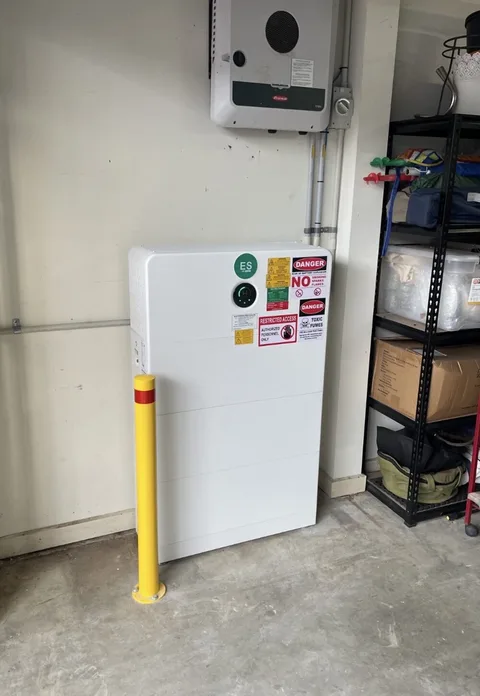
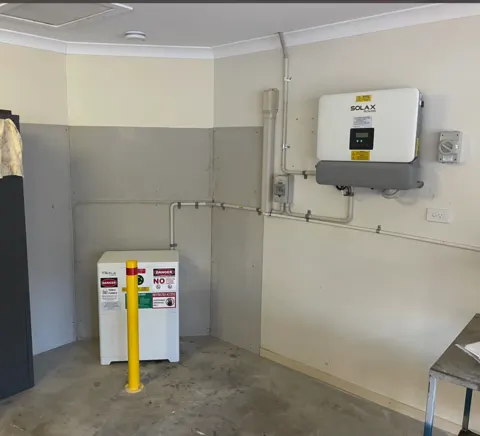
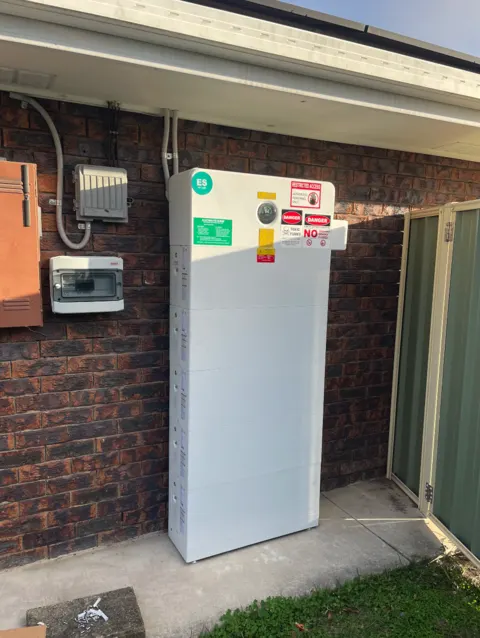
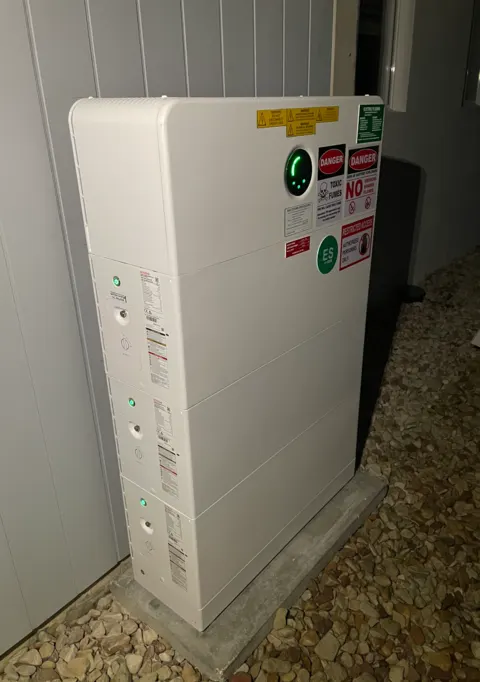
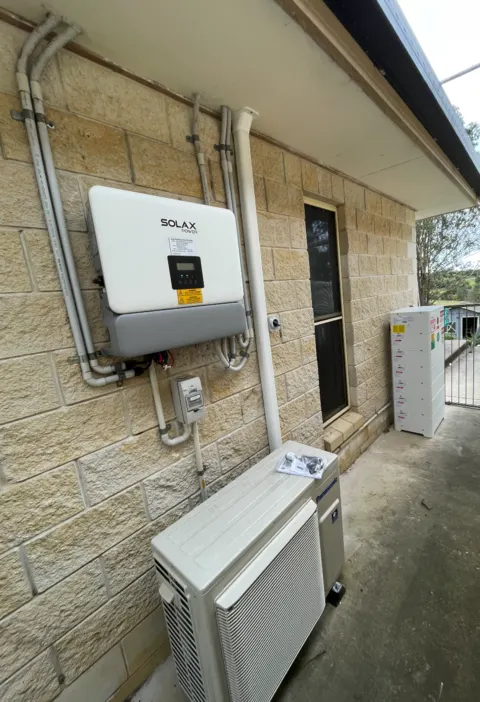
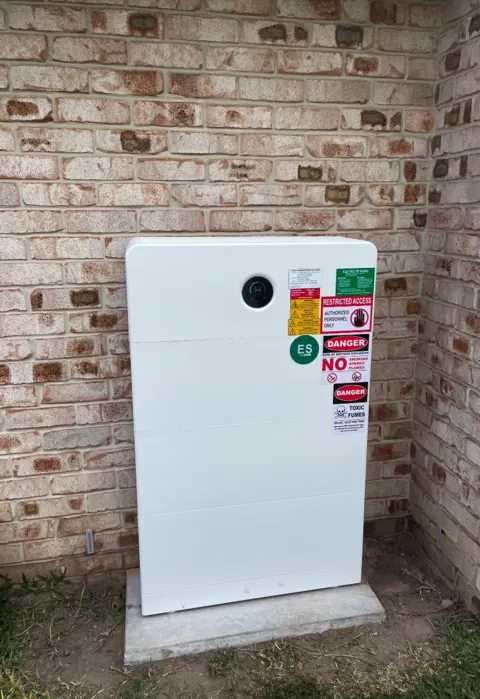
Battery installation across South East Queensland
Sunshine Coast
We install home and solar batteries across the Sunshine Coast — from Caloundra through Maroochydore up to Noosa, and inland through the hinterland. Most Sunshine Coast homes have rooftop solar that's exporting power at low feed-in rates, and a properly sized battery flips that into usable storage.
Brisbane
We install home batteries across Greater Brisbane for homeowners who want lower bills, blackout protection or to prepare for EV charging and all-electric living. Brisbane's mix of high consumption, hot summers and storm activity makes a properly sized battery a strong upgrade.
Moreton Bay
We install home batteries across the Moreton Bay region — Caboolture, North Lakes, Redcliffe, Burpengary, Narangba and surrounding suburbs. Moreton Bay has one of the highest concentrations of rooftop solar in the country, and a battery is the natural next step.
Get your personalised battery assessment
Tell us a little about your home and one of our licensed installers will be in touch to size the right system, confirm your rebate and give you a clear, itemised quote.
- A recommended system sized to your real usage
- Your federal rebate confirmed, not guessed
- A clear, itemised quote — no upsell pressure
We'll tell you when a battery isn't the right call
Batteries are a serious investment. They're brilliant when the brief is right and a poor decision when it isn't. Here's our honest position on when they work, when they don't, and what proper design actually involves.
When a home battery makes sense
You have existing solar exporting at low feed-in rates, you use significant power overnight, you want backup for storm-season outages, or you're planning an EV or further electrification. In those cases the economics and the resilience both add up.
When a battery may not make financial sense
If your home uses very little power overnight, you're rarely home, your feed-in tariff is high, or you don't need backup capability — the payback may not justify the investment. We'll tell you honestly when we don't think a battery makes sense for your situation.
Honest limits of whole-home backup
Most homes can't realistically run the entire house — ducted AC, oven, pool pump — from a single home battery for any useful duration. Essential-circuit backup (fridge, internet, lighting, one AC head, medical equipment) is usually the more honest design and delivers dramatically longer runtime.
Why proper system design matters
A battery is only as good as the design around it. Cheap installs that skip load profiling, undersize the inverter for surge, or get backup wiring wrong fail in exactly the moments they were bought for. We design every system with peak loads, surge behaviour and switchboard layout in mind — not just nameplate capacity.
Ready to Charge at Home?
Get a professionally installed EV charger designed around your vehicle, property and energy system.
Frequently Asked Questions
How much does battery installation cost?
It depends on battery capacity, brand, backup configuration, and any switchboard or hybrid inverter work required. Request a quote and we'll provide a clear, itemised price for your home.
Can I add a battery to my existing solar system?
In most cases yes. AC-coupled batteries like Tesla Powerwall sit alongside almost any existing solar inverter. DC-coupled systems like GoodWe, Sungrow or Sigenergy replace your inverter with a hybrid unit and are usually more efficient — we'll recommend the right approach.
Will a battery run my whole house during a blackout?
It depends on the battery, inverter, your loads and switchboard. For most homes we recommend an essential-circuits backup covering lights, fridge, internet and selected power points. Whole-home backup is possible with larger inverters and careful load planning.
What size battery do I need?
Most South East Queensland homes land between 10 kWh and 20 kWh of usable capacity. We size based on your overnight consumption, not your solar size. Use our detailed battery sizer for a starting point, then we confirm at the site visit.
Do I need a hybrid inverter?
Not always. AC-coupled batteries work with your existing solar inverter. Hybrid inverters are needed for DC-coupled batteries and offer higher round-trip efficiency.
How long does installation take?
Most residential battery installs are completed in one day on-site. Hybrid inverter swaps or switchboard upgrades may add a day.
Which battery brand is best?
There's no single best, but for most SEQ homes we specify GoodWe, Sungrow or Sigenergy first — they offer the strongest mix of value, backup capability and Australian support. Tesla Powerwall and BYD are also good options and we install them too. We'll recommend based on your existing setup and goals.
Do batteries work during grid outages?
Only if the battery and inverter are backup-capable and a backup sub-board is wired in. Many older battery installs were never wired for backup — we add backup capability where it's missing.
Is a home battery worth it?
It depends on your evening usage, existing solar, and how much you value backup. Households with high overnight usage and existing solar typically see the strongest results. Our payback calculator gives you a starting estimate.
Can I backup my air conditioner?
Often yes, but the inverter has to handle the AC's start-up surge. We do the load calculations before quoting.
Do you install off-grid systems?
Yes. We design and install off-grid battery systems using Selectronic and Victron platforms — for rural properties, weekenders and homes where grid connection isn't practical or reliable.
Are you SAA accredited?
Yes. Battery Install Co installations are completed by SAA accredited battery installers and licensed Queensland electrical contractors. License Electrical Licence: 1510704, ABN 79 698 225 008.
Get a battery install quote for your home
Tell us about your home and existing solar — we'll come back with a clear, itemised quote.